Central to many of the issues in sub–Saharan Africa in general, and Turkana in particular, is a lack of water. It’s an arid area with a dependence on the seasonal rains which don’t always arrive. Droughts are frequent causes for concern. In the midst of this is the largest desert lake in the world, Lake Turkana, a source not of drinkable water but of fish. As a result, villages have grown up around the shores, schools and other infrastructure have followed, and many of the Turkana have been able to eke out a living by fishing.
Besides drought there have, in the past, been concerns about low water levels resulting from dams and hydroelectric activity upstream in Ethiopia. Either way, the concern has been with low water levels, but now there is a new and very different threat, one of too much water. Water levels have risen to the extent that flooding has forced some villages to move away from the shores and begun to threaten schools and other habitations. It seems that the flooding results from climate change with the rains arriving more erratically, so the normally dry months now often see rain. The threat of drought has not disappeared, but any predictability has. Caught between periods of drought and periods of excessive precipitation, the local people find their homes and schools threatened and their way of life at risk.
The response to all this from the experts is to propose intergovernmental initiatives involving Kenya and Ethiopia to manage the River Omo, the main inlet to the lake, and to contain the lake itself. At a local level however, the concern is that anything requiring government action, let alone agreement between two governments, could be a long time coming. So, the focus is on how to protect existing buildings and settlements, what the options are for moving to higher ground, and all the implications of this, including rebuilding, provision of materials and assessing just where is safe. An ongoing issue to which we will no doubt return.
Our most serious concern is the nursery, primary and junior secondary school in Todonyang, which has been providing a high quality education to the children of the area for almost 13 years. With the water getting so close, we may have to move and completely rebuild this huge complex. Clearly, a massive undertaking that will require a renewed commitment to help support new projects, as the consequences of climate change continue to impact on vulnerable communities through no fault of their own. We will continue to update you on these challenges as they materialise. Watch our video “Rain and Health 2024” below.
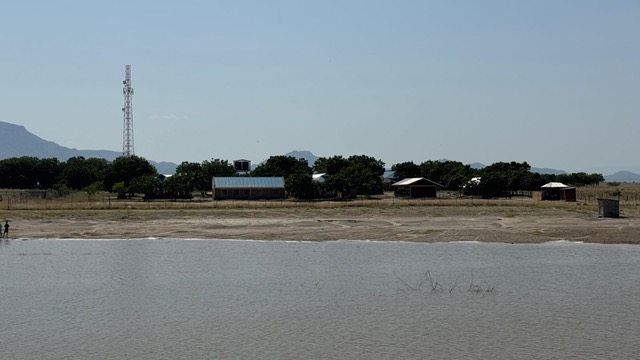
This is where the water has currently stopped next to the school fence after overrunning the barrier of the earth dam and spilling towards the school.
This is the fence of the mission just behind the wall of the earth dam barrier facing the lake
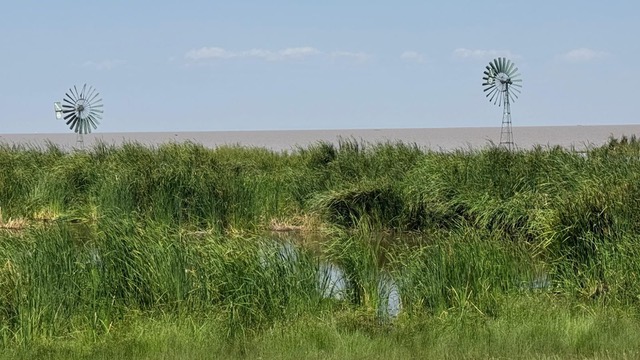
Those are our wind pumps in 2023 moved them 200 metres away from the water but now here we are.
This is where the water has currently stopped next to the school fence after overrunning the barrier of the earth dam and spilling towards the school.
This is the fence of the mission just behind the wall of the earth dam barrier facing the lake
Those are our wind pumps in 2023 moved them 200 metres away from the water but now here we are.