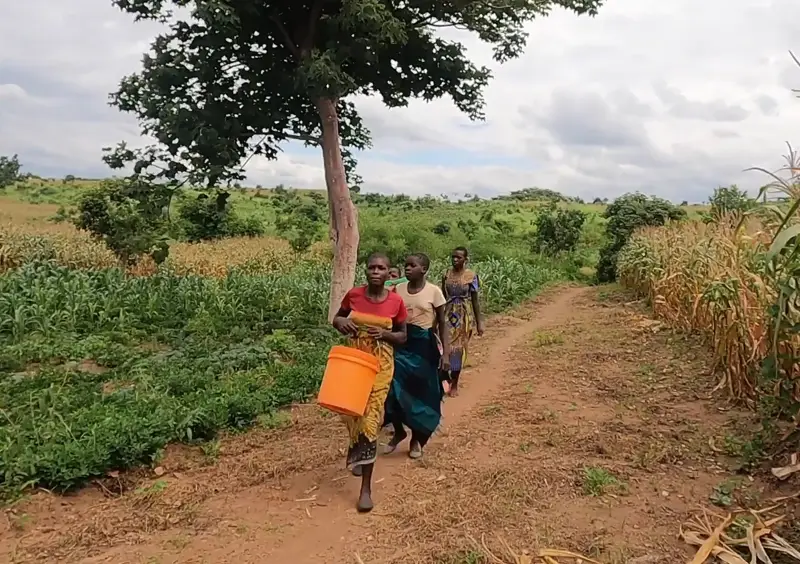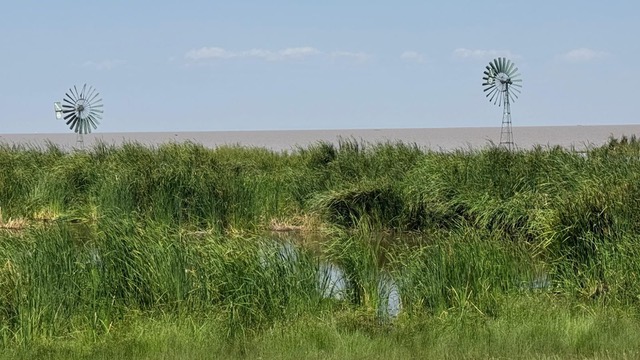
As always, the weather plays a key role in the health and well-being of the people of Turkana. A year without rain ended in April 2024, and enough water was then collected in the earth pan and rock dams to sustain people through a future drought, whilst the water table was refreshed and a green land re-emerged, swept by a cool breeze. Birdsong could be heard, and the children swam.
Sadly, it was not all good news. Cases of Malaria increase as mosquitos thrive in these conditions. Asthma, bronchitis and pneumonia affect many as living conditions become cold and damp. And it’s not just the end of the drought. There is also a changing pattern of rainfall. Turkana, being a semi-arid land in northern Kenya, on a normal basis receives seasonal rains twice a year, with long rains pouring in the months of April and May and short rains in October and November. In normal rainfall circumstances, this could keep the community going till the next season.
The way of life, approaches to travel, and planning have always taken into account the seasonal rains. Recently however, as a result of climate change, rain is experienced every few weeks – and the impact is wider than on such practical considerations. It affects health too. Night-time temperatures are much lower, traditional living accommodation is inadequate for the new reality, and people are forced to sleep in cold and damp conditions. The result? An upsurge in disease – flu, pneumonia and more, but especially malaria.
Earlier this year, the Kenya Health Information System showed a 39% prevalence of malaria in Turkana, compared to 6% over Kenya as a whole – and cases shot up whenever the rain came. There are steps which can be taken to control malaria and the simplest is the use of mosquito nets which provide an effective defence at night when the mosquitos are most active. Nets are inexpensive and provision can make a huge difference – all donations toward this will be much appreciated, here: https://www.justgiving.com/campaign/alternativegiftsmalaria